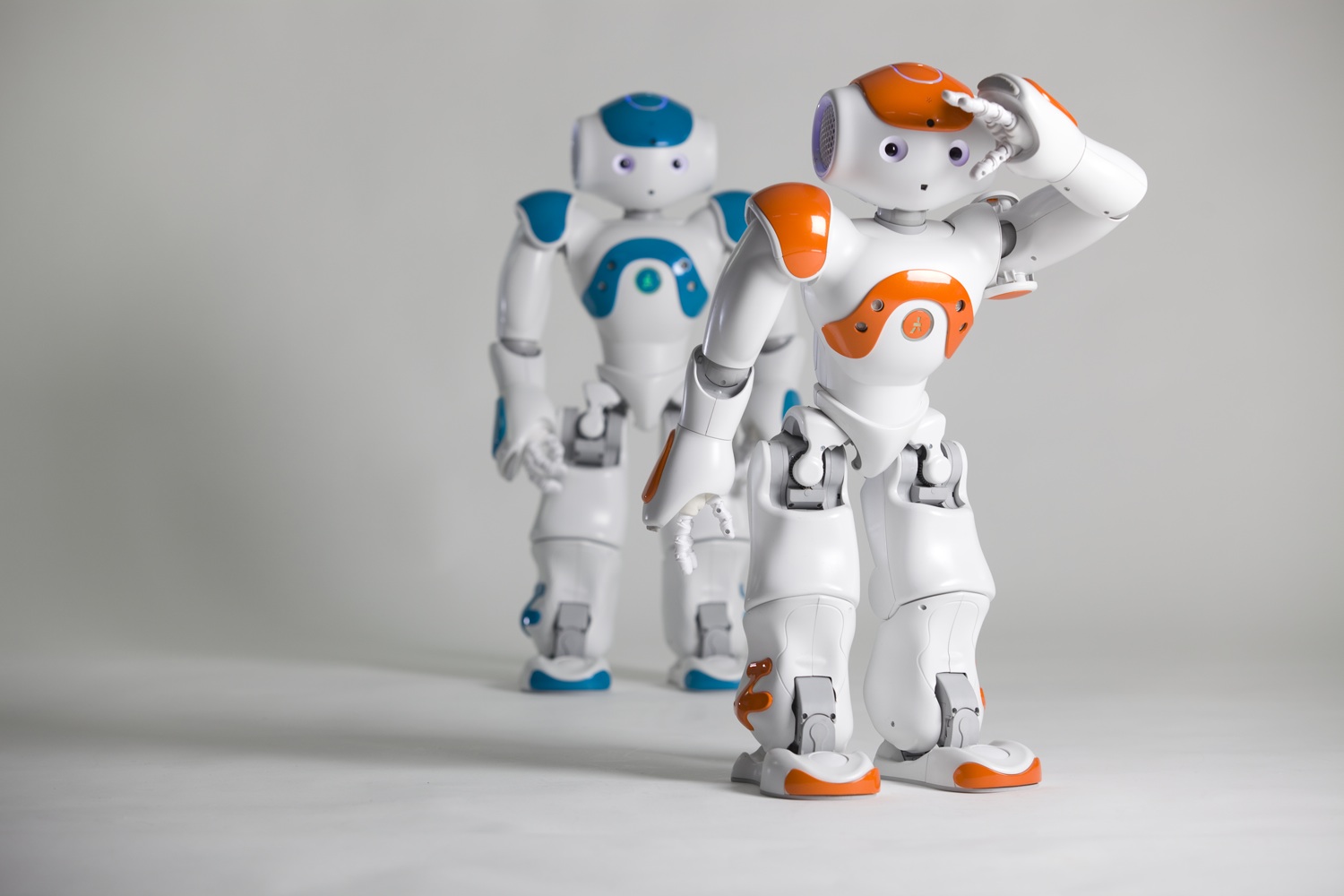
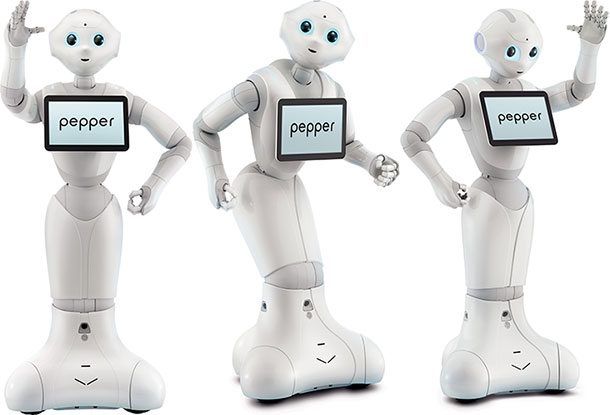
Aldebaran sat at a strange intersection: part tech company, part toy maker, part research lab. The robots I worked with, NAO and Pepper, were consumer products, which meant the bar wasn’t just “does it work” but “does it feel good to interact with.”
My role was to design and develop features end to end, working across disciplines with hardware engineers, designers, sound designers, UI artists, UX, animators and low-level software engineers. The same kind of cross-functional collaboration I knew from game development, applied to something that existed in the physical world.
What I built
The bulk of my work was on Pepper’s autonomous recharge system. Getting a robot to find its dock, navigate towards it and start the recharge process. I also built the scheduling layer, a tablet app that let users define when Pepper could recharge autonomously.
The other major feature was human tracking: a robot that could hear you say “come here,” locate you and follow as you moved.
On Friday afternoons, I took the time to experiment. Some of those experiments were purely fun. Some allowed me to understand better what kind of interaction really mattered.
NAO & Pepper